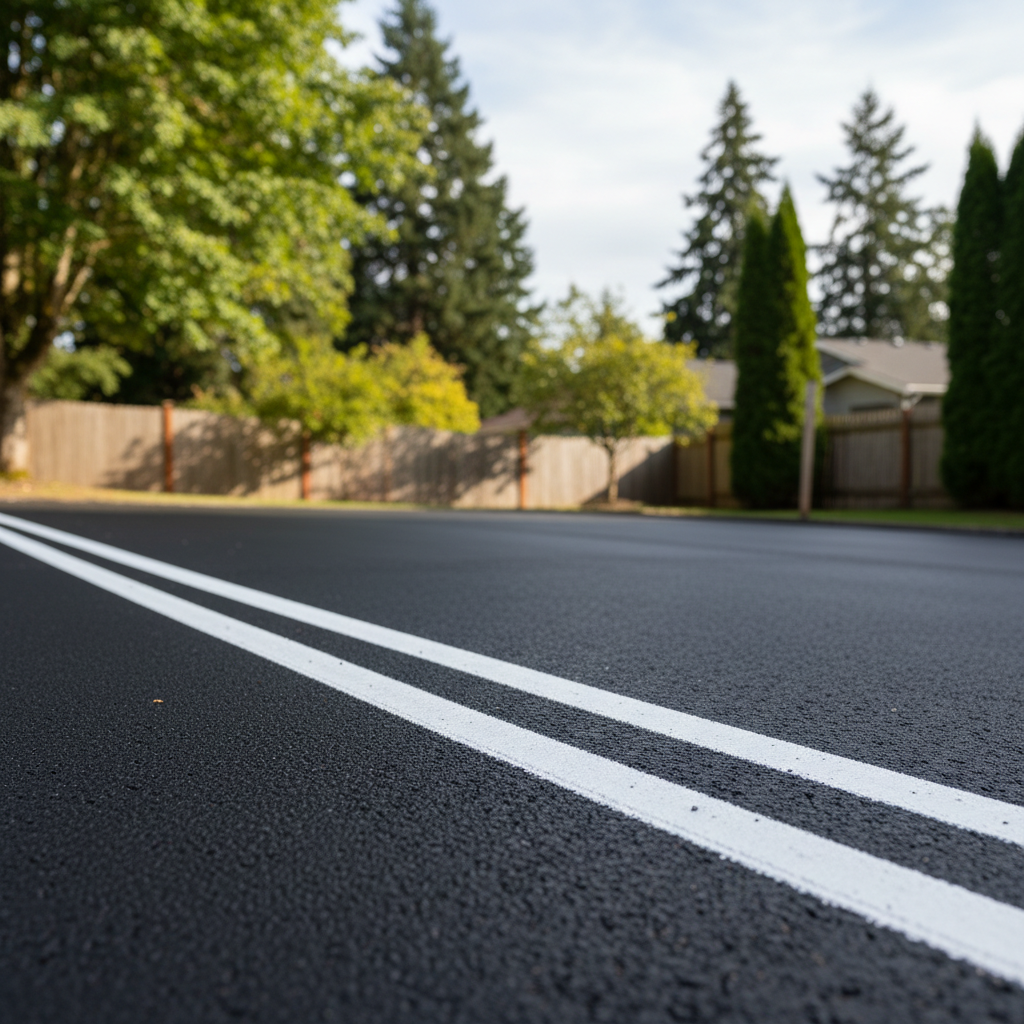
Alright, let's talk striping. You've just had a fresh asphalt driveway or parking pad put in, or maybe you're looking to refresh an old one, and now you're thinking about those crisp lines. It's not just for big commercial lots, you know. Homeowners, especially those with larger properties, shared driveways, or even basketball courts, often have questions about getting their asphalt marked up. Here in Renton, I get asked a lot of the same things, so I figured I'd lay it all out for you.
Do I even need striping for my home?
That's a good question, and honestly, for most single-family homes with a standard two-car driveway, probably not. You know where to park, right? But if you've got a bigger property, maybe a multi-unit dwelling, a shared access lane, or even a dedicated sports court, then yeah, striping makes a lot of sense. It defines parking spots, directs traffic flow, or clearly marks out your pickleball court. It adds functionality and can even boost curb appeal by making things look neat and organized. Think about those homes up on the hills near Fairwood or Newcastle where space can be a bit tighter – clear lines really help.
What kind of paint do you use for asphalt striping? Is it just regular paint?
Definitely not regular paint! You can't just slap house paint on asphalt; it'll crack, peel, and fade in no time, especially with our wet Renton winters. We use specialized traffic paint. It's designed to withstand vehicle traffic, UV rays, and our lovely Pacific Northwest weather. This stuff is durable, dries fast, and is formulated to adhere properly to asphalt. There are different types, like water-based acrylics or solvent-based options, and we pick the right one based on the surface, expected traffic, and desired longevity. Sometimes, we'll even add glass beads to the paint for reflectivity, which is great for safety if you've got a darker area or want lines to pop at night.
How long does asphalt striping last?
That really depends on a few factors. High-traffic areas, like a shared driveway with multiple cars coming and going all day, will wear down faster than a basketball court that only sees occasional use. The type of paint, how well the surface was prepped, and the local weather (hello, rain and freeze-thaw cycles!) all play a role. Generally, for residential applications, you can expect good quality striping to last anywhere from 2 to 5 years before it starts looking faded and needs a refresh. If you've got a really busy spot, you might be looking at every 2-3 years. It's like anything else; maintenance helps it last longer.
Can you stripe over old, faded lines?
Most of the time, yes, we can. If the old lines are just faded but still somewhat visible, we can usually go right over them. This is often the most cost-effective approach. We'll clean the surface thoroughly first to make sure the new paint adheres well. However, if the old lines are really chipped, peeling, or if you want to change the layout, then we might need to remove the old paint first. That's a more involved process, sometimes involving grinding or blacking out the old lines, which adds to the cost and time. We'll always assess it on site and give you the best option.
How much does asphalt striping cost for a home?
This isn't a one-size-fits-all answer, unfortunately. The cost varies quite a bit depending on the size of the area, the complexity of the design (simple straight lines versus intricate stencils or symbols), the type of paint used, and any prep work needed. For a small residential job, like a couple of parking spots or a simple court, you might be looking at a few hundred dollars. Larger, more complex jobs will naturally cost more. The best way to get an accurate price is to have us come out, take a look, and give you a free estimate. We'll measure everything up and give you a clear breakdown. At Pacific Paving Solutions, we believe in transparent pricing.
How long does it take to dry, and when can I drive on it?
Good news here: modern traffic paints dry pretty quickly. Most of the paints we use are touch-dry within 15-30 minutes, sometimes even faster on a warm, dry day. However, 'touch-dry' isn't the same as 'ready for heavy traffic.' We usually recommend staying off the freshly striped area for at least an hour, and ideally 2-4 hours, to allow the paint to fully cure and prevent tracking. If it's a particularly humid or cool day, or if we've applied a thicker coat, we might advise a longer wait. We'll always give you specific instructions on the day of the job to make sure your new lines stay perfect.