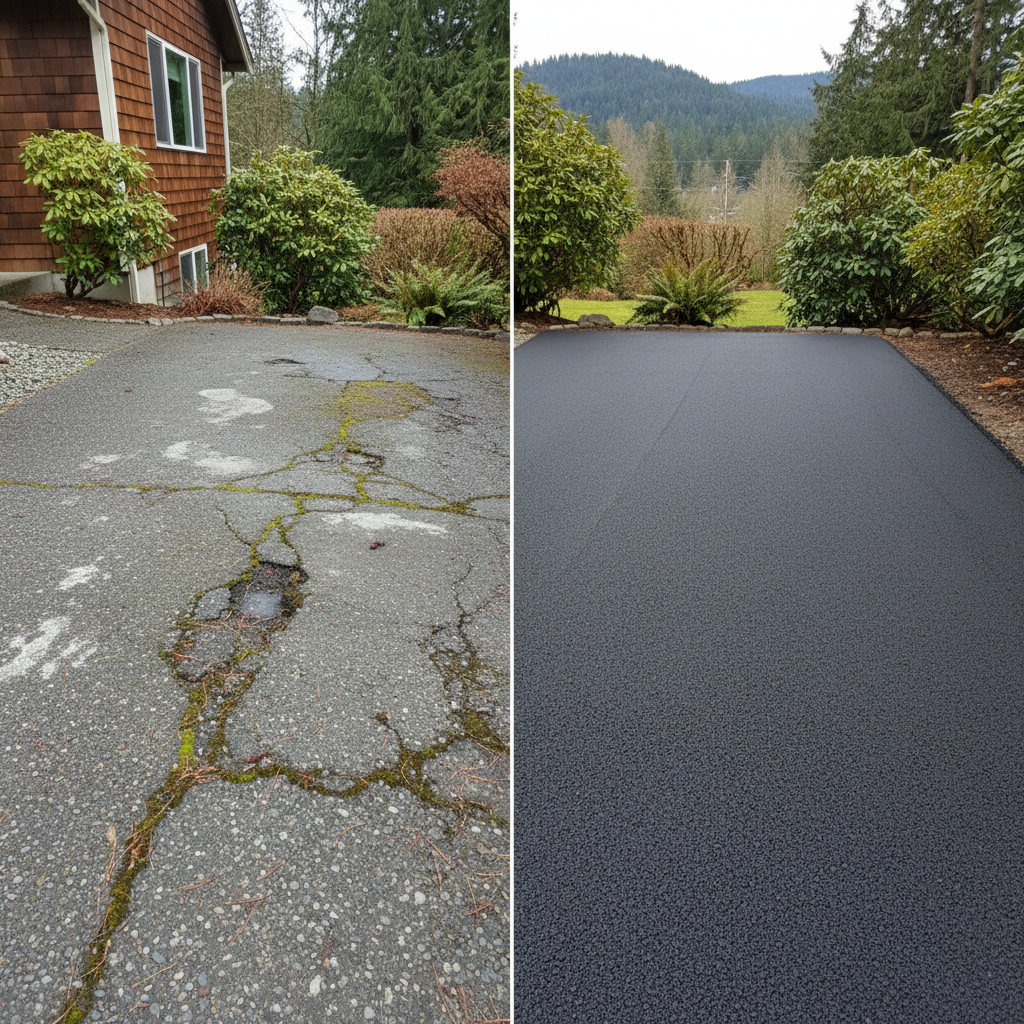
Your driveway's seen better days, huh? Cracks, potholes, maybe it just looks tired. When you're thinking about getting it fixed up, especially here in Renton, you've generally got two big options: an asphalt overlay or a full remove and replace. I've seen plenty of both over the years, and each has its place. Let's talk about what you need to know to make the right call for your home.
What's an Asphalt Overlay?
Think of an overlay like putting a fresh coat of paint on a wall, really. We're not tearing anything out; we're just adding a new layer of asphalt right on top of your existing one. Before we do that, though, we prep the surface. That means cleaning it thoroughly, filling any major cracks or potholes, and sometimes even milling down high spots or the edges where it meets your garage or the street. The goal? To create a smooth, stable base for the new asphalt layer.
What's Full Remove and Replace?
This one's pretty straightforward: we rip it all out. Every bit of the old asphalt, and sometimes even some of the base material underneath, gets removed. Then, we prepare a brand-new base, compact it properly, and lay down fresh asphalt from scratch. It's a complete do-over, from the ground up.
Cost: The Wallet Factor
Alright, let's get to what's probably on your mind first: money. An overlay is almost always going to be cheaper upfront. You're using less material, and we're not spending a ton of time and labor on demolition and hauling away all that old asphalt. It's a faster job, too, which also saves on labor costs.
A full remove and replace, on the other hand, is a bigger investment. You're paying for demolition, disposal, new base material, and more asphalt. It's a more involved process from start to finish. But don't let the higher price tag scare you off completely; sometimes it's the only real solution, and it can save you headaches down the road.
Durability & Lifespan: How Long Will It Last?
This is where the condition of your existing driveway really matters. An overlay can add a good 7-15 years to your driveway's life, assuming the base underneath is still in decent shape. If you've got a lot of structural issues — deep, alligator cracking, major potholes that go all the way through, or sections that are sinking because of a bad base — an overlay is just a band-aid. That new layer will eventually crack right along with the old problems underneath. It's like putting a new rug over a broken floorboard; it might look good for a bit, but the problem's still there.
A full remove and replace? That's your long-term solution. When done right, with a properly prepared and compacted base, a new asphalt driveway can last 20-30 years, sometimes even longer with good maintenance. You're building from scratch, so you're addressing any underlying issues with the soil or drainage that might have caused problems in the first place.
Maintenance: Keeping It Looking Good
No matter which option you choose, you'll need to maintain your asphalt. That means regular sealcoating every few years, especially with our wet Renton winters and the freeze-thaw cycles we get. You'll also want to fill any small cracks as they appear. An overlay might show signs of wear a bit sooner if the underlying issues start to resurface. A full replacement, because it's new from the ground up, generally holds up better to maintenance and will look great for longer.
Appearance: The Curb Appeal Angle
Both options will give you a fresh, black asphalt surface that looks great initially. An overlay, since it's a thinner layer, might not always perfectly hide every single imperfection from the old driveway, especially if there were significant dips or humps. A full replacement gives you a perfectly smooth, uniform surface because we're starting fresh. If you're really particular about a flawless look, or if your current driveway is really uneven, a full R&R is the way to go.
My Recommendation for Renton Homeowners
Here's the deal: if your driveway has minor cracks, some fading, and generally just looks worn but doesn't have major structural problems — no big dips, no widespread alligator cracking, and the base feels solid when you drive over it — an overlay is a fantastic, cost-effective solution. It'll give you a great new surface for years.
But if you've got significant issues, especially if you're seeing standing water, major depressions, or cracks that look like an alligator's back, then you really need a full remove and replace. Trying to save a buck with an overlay on a structurally compromised driveway is just throwing good money after bad. You'll be back to square one much faster, and then you'll have to pay for the R&R anyway, plus the cost of the failed overlay. I've seen it happen too many times, especially in areas like the Highlands where soil conditions can sometimes be a bit tricky with drainage.
The best way to know for sure? Get a professional assessment. We'll come out, take a look at your specific driveway, and give you an honest opinion on whether an overlay will actually solve your problems or if you need to bite the bullet and go for a full replacement. We're Pacific Paving Solutions, and we're here to help you make the right choice for your home and your budget.