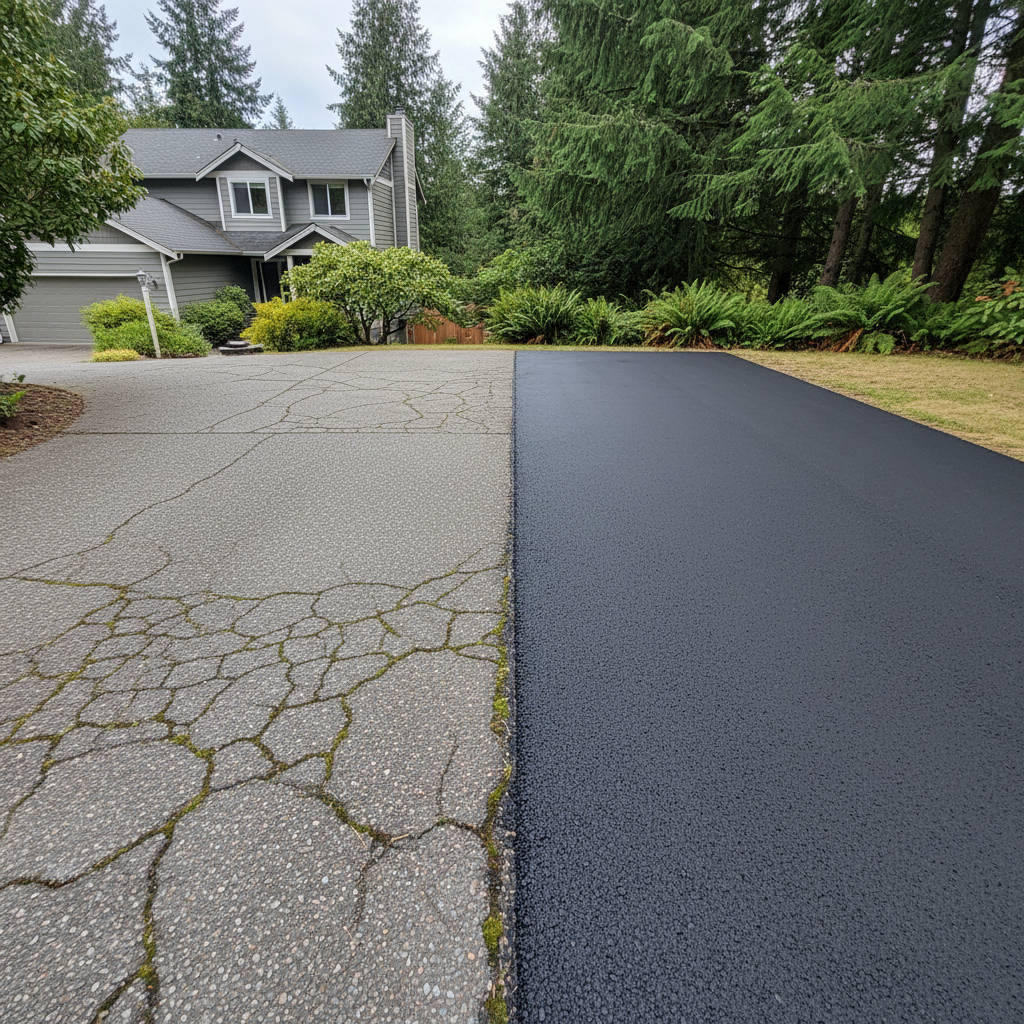
Alright, so you're looking at your driveway, and it's seen better days. Maybe it's cracked, maybe it's got potholes, or maybe you just bought a new place in the Highlands and want to upgrade that old, beat-up gravel path. Whatever the reason, you're thinking asphalt, and that's a smart move for durability and curb appeal. But here's where it gets a little tricky: you've got a couple of main ways to go about it, and they're not all created equal. We're talking about a brand-new, full-depth asphalt driveway versus what we call a 'thin overlay.'
Full-Depth Asphalt: The Gold Standard
Let's start with the big one, the one I usually recommend if your budget allows and your existing base is shot: full-depth asphalt. What does that mean, exactly? It means we're tearing out everything that's there – all the old asphalt, gravel, dirt, whatever – right down to the subgrade. Then, we build it back up from scratch. This usually involves a properly compacted aggregate base layer, sometimes two, followed by a binder course of asphalt, and then a final surface course.
Why go this route? Simple: longevity and performance. When you build from the ground up, you're addressing any issues with the underlying soil. Here in Renton, especially in some of those older neighborhoods with clay-heavy soils, proper subgrade preparation and a robust aggregate base are absolutely critical. If you don't get that right, you're just putting lipstick on a pig. A full-depth installation gives you:
- Maximum Durability: This is built to last, plain and simple. We're talking 20-30 years with proper maintenance.
- Superior Strength: It handles heavier loads without cracking or rutting. Think RVs, delivery trucks, that sort of thing.
- Better Drainage: We can establish proper slopes and grades from the start, which is huge for shedding our infamous Washington rain.
- A Fresh Start: No old cracks or weak spots will show through to your new surface.
The downside? Cost. It's more labor-intensive, requires more materials, and involves more excavation. So, yeah, it's a bigger upfront investment.
Thin Asphalt Overlay: The Budget-Friendly Fix
Now, let's talk about the thin overlay. This is where we essentially put a new layer of asphalt right on top of your existing, *stable* asphalt driveway. We'll clean the surface, often apply a tack coat (a sticky emulsion that helps the new layer bond), and then pave a relatively thin layer – usually 1.5 to 2 inches – of new asphalt over the old one.
This option definitely has its place, and it's often more appealing because it's less expensive upfront. It's a good choice if:
- Your existing asphalt is in decent shape: I mean, it's got some cracks, maybe some minor potholes, but the base underneath is solid. It's not crumbling everywhere, and there aren't major areas of alligator cracking.
- You're looking for a quick facelift: It instantly improves the appearance of a worn-out driveway.
- Budget is a primary concern: You get a fresh look without the full cost of a tear-out and rebuild.
However, there are some pretty big caveats here. The biggest one is that an overlay is only as good as what's underneath it. If your existing base is failing, or you've got significant structural cracks, those problems are going to show up again in your new overlay, probably sooner rather than later. We call that